7.7K
Downloads
33
Episodes
Each episode of the Physiological Reviews podcast features commentary and discussion of newly published articles in the journal, which provides state-of-the-art, comprehensive, and high-impact coverage of timely issues in the physiological and biomedical sciences. Physiological Reviews articles appeal to physiologists, neuroscientists, cell biologists, biophysicists, and clinicians with special interest in pathophysiology. The journal is very useful in teaching and research because it provides non-biased and clearly written updates on important developments.
Episodes

7 days ago
7 days ago
In this episode Editor-in-Chief Dr. Sadis Matalon (University of Alabama Birmingham) interviews author Dr. Laura Crotty Alexander (University of California, San Diego) about the recently published Review article by Masso-Silva et al. on the impact of e-cigarette vaping on the immune system across the body. We discuss in depth how vaping limits the ability of alveolar macrophages to protect the body from pathogens, and cover the impact of vaping on T cells, the powerhouse cells of adaptive immunity, to respond robustly to tumor antigens. Does vaping impact the rate of tumor growth in cancer patients, particularly breast cancer and prostate cancer? Listen now to learn much more.
Jorge A. Masso-Silva, Alexia Perryman, Sophia Karandashova, Avnee Jaya Kumar, Laura Barnes, Nikita Kasaraneni, and Laura E. Crotty Alexander Impact of e-cigarette vaping on the immune system across the body Physiological Reviews, published January 24, 2026. DOI: 10.1152/physrev.00011.2025

Friday Feb 20, 2026
Friday Feb 20, 2026
In this episode Associate Editor Dr. George Cotsarelis (University of Pennsylvania) and author Dr. Ralf Paus (University of Manchester) discuss the Review article by Altendorf on male pattern androgenetic alopecia. We uncover the physiology and function of hair in a wide-ranging and engaging conversation. In addition to producing pigmented protein fibers, the “mini organ” that makes our hair shaft not only senses the environment, it chemosenses the environment. According to Dr. Paus, hair can smell, taste, and see! What is the future of hair research? Listen now and find out more about this fascinating topic.
Sabrina Altendorf, Marta Bertolini, Alizée Le Riche, Antonella Tosti, and Ralf Paus Frontiers in the physiology of male pattern androgenetic alopecia: beyond the androgen horizon Physiological Reviews, published September 15, 2025. DOI: 10.1152/physrev.00005.2024
Wednesday Dec 10, 2025
Wednesday Dec 10, 2025
In our latest episode, Associate Editor Dr. John Orlowski (McGill University) interviews Dr. Matthias A Hediger (University of Bern) about the new Review article by Gyimesi et al. published in Physiological Reviews on the intracies of a superfamily of membrane solute carriers that is critically important to our understanding of human health and disease. This extensive Review contains over 3500 citations describing the superfamily of solute carriers the authors refer to as “The SLC-ome.” These SLCs comprise the largest group of membrane transport proteins encoded by the human genome and are responsible for moving numerous solutes and other essential biological compounds in and out of cells. Ready to learn more about how the SLC-ome is essential to mediating the movement of nutrients, electrolytes, metabolites and other molecules, such as pharmacological drugs, across cellular and organellar membranes? Listen now to learn more.
Gergely Gyimesi, Susan Tweedie, Elspeth Bruford, and Matthias A Hediger The SLC-ome of membrane transport: From molecular discovery to physiology and clinical applications Physiological Reviews, published September 30, 2025. DOI: 10.1152/physrev.00001.2024
Friday Oct 24, 2025
Friday Oct 24, 2025
What is the difference between forward and reverse cardio-oncology? In our latest episode, Deputy Editor Dr. Carol Ann Remme (University of Amsterdam) interviews Dr. Rudolf de Boer (Erasmus Medical Center) about the new Review article by Meijers et al. Forward cardio-oncology focuses on cardiotoxicity and cardiac damage due to anti-cancer therapies in patients with prevalent cancer. In contrast, reverse cardio-oncology describes the phenomenon that cancer is more often discovered in patients with prevalent cardiovascular disease. In the more established field of forward cardio-oncology, the focus has been on the diverse array of anti-cancer drugs used to treat different types of cancer that are associated with wide-ranging cardiotoxic effects, such as atrial fibrillation and venous embolism. The developing field of reverse cardio-oncology was launched by initial observations made in clinical registries where the incidence of cancer was common among patients with heart failure. Clinical observations led to the development of murine models of cancer which found the presence of heart failure accelerated tumor growth and considered possible pro-oncogenic factors such as cytokines and extracellular vesicles, along with the microbiome and the immune system. One multifactorial disease is often clinically associated with another multifactorial disease, and underlying physiological mechanisms are complex and multifactorial as well. To learn more, listen now.
Wouter C. Meijers, Joseph Pierre Aboumsallem, Alexander R. Lyon, Javid Moslehi, and Rudolf A. de Boer Forward and reverse cardio-oncology Physiological Reviews, published September 22, 2025. DOI: 10.1152/physrev.00041.2024
Friday Sep 12, 2025
Friday Sep 12, 2025
What role does inflammation play in atherosclerosis? In our latest episode of The Physiological Reviews Podcast, Dr. Carol Ann Remme talks with authors Dr. Esther Lutgens (Mayo Clinic) and Dr. Claudia Monaco (University of Oxford) about their recent Review on immunotherapy for atherosclerosis. The authors discuss the network of multiple immune cell types and subsets of the innate and adaptive immune system that occupy arteries. In addition, Monaco et al. discuss local inflammation in the arterial wall or plaque compared to systemic inflammation. The authors also discuss atherosclerosis as a process of aging, rather than as a disease. What is the holy grail of safe immunotherapeutic approaches and the future of personalized medicine for atherosclerosis? Listen now to learn more.
Claudia Monaco, Coleen A. McNamara, Bram Slütter, Amanda C. Foks, Stefan Bekiranov, Willem J.M. Mulder, Isabel Gonçalves, and Esther Lutgens Immunotherapy for atherosclerosis Physiological Reviews, published May 21, 2025. DOI: 10.1152/physrev.00016.2024
Wednesday May 21, 2025
Wednesday May 21, 2025
What is cerebral small vessel disease and why is it such a critical area of research? In this episode, Associate Editor Dr. Scott Earley (University of Rochester) interviews author Dr. Anne Joutel (Université Paris Cité, Institute of Psychiatry and Neuroscience of Paris, INSERM) about the pathogenic diagnosis and molecular basis of cerebral small vessel disease (cSVD). Classified into two categories, cerebral amyloid angiopathy (CAA) and nonamyloid cSVD, cSVD is a major health problem responsible for about 25% of ischemic strokes, the vast majority of spontaneous intracerebral hemorrhage, and about 20% of all dementia cases. What role does the presence of lesions in small vessels play in exacerbating the burden of neurodegenerative diseases such as Alzheimer’s Disease? What is “silent cSVD” and how common is it? Listen now to find out more.
Hugh S. Markus and Anne Joutel The pathogenesis of cerebral small vessel disease and vascular cognitive impairment Physiological Reviews, published February 18, 2025. DOI: 10.1152/physrev.00028.2024

Tuesday May 20, 2025
Tuesday May 20, 2025
In this episode, Dr. Jan Born (University of Tübingen) interviews his colleague and author Dr. Andreas Nieder (University of Tübingen) about his recent Review in Physiological Reviews on mathematical reasoning that incorporates neurobiology, comparative physiology, and neurophysiology. Mathematical skills can be described as falling into symbolic (arithmetic, number theory) and non-symbolic (set size) representations of numerical quantities. Infants as young as 2 days old can discriminate set size, for example, distinguishing between four dots and eight dots. And then, of course, there is the fascinating concept of zero, which is “rather like the eccentric uncle in the series of numbers,” as Dr. Nieder says. Understanding the concept of zero as the absence of something, represented as a number, is critical to understanding all other numbers. How does all of this work in the brain? Listen and find out.
Andreas Nieder The calculating brain Physiological Reviews, published October 25, 2024. DOI: 10.1152/physrev.00014.2024
Tuesday Apr 22, 2025
Tuesday Apr 22, 2025
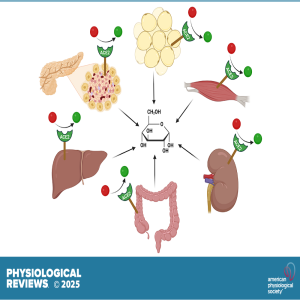
In the episode, Dr. Willis K. “Rick” Samson (Saint Louis University School of Medicine) interviews lead author Dr. Eric Lazartigues (Louisiana State University Health Sciences Center) about the recent Review by Chhabra et al. on the latest discoveries related to the role of ACE2 in glucose homeostasis and regulation of metabolism. What are the consequences, in terms of pancreatic function and glucose homeostasis, for ACE2 knockout animals compared to animals used in overexpression studies? Listen as we discuss skeletal muscle effects related to changes in body weight, effects on intestinal absorption and the microbiome, as well as potential clinical applications of ACE2 therapies. What advice does Dr. Lazartigues offer to early career researchers about how to pursue their good ideas? Listen to find out.
Kavaljit H. Chhabra, Robin Shoemaker, Chandana B. Herath, Merlin C. Thomas, Catalin M. Filipeanu, and Eric Lazartigues Molecular Dissection of the Role of ACE2 in Glucose Homeostasis Physiological Reviews, published February 7, 2025. DOI: 10.1152/physrev.00027.2024
Friday Feb 28, 2025
Friday Feb 28, 2025
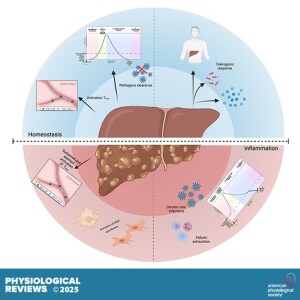
In the episode, Dr. Mark Donowitz (Johns Hopkins School of Medicine) interviews Dr. Pietro Invernizzi (IRCCS Fondazione San Gerardo dei Tintori; University of Milano-Bicocca) and Dr. Vincenzo Ronca (University of Birmingham; Humanitas University) about their recent Review article that describes the immune function of the liver. Listen as these experts discuss immune tolerance in the liver, sex differences related to this immune tolerance, as well as new technological developments applied to the current understanding of immunology in the liver. This engaging conversation offers insights into both autoimmune liver diseases and non-autoimmune liver diseases, and glances toward the future for the “next big thing” advancing the field. To find out more, listen now.
Vincenzo Ronca, Alessio Gerussi, Paul Collins, Alessandro Parente, Ye Htun Oo, and Pietro Invernizzi The liver as a central “hub” of the immune system: pathophysiological implications Physiological Reviews, published January 15, 2025. DOI: 10.1152/physrev.00004.2023
Thursday Dec 05, 2024
Thursday Dec 05, 2024
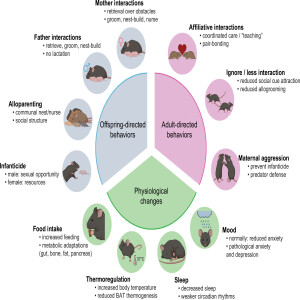
In the episode, Dr. Sadis Matalon (University of Alabama Birmingham) interviews Dr. Catherine Dulac (Howard Hughes Medical Institute, Center for Brain Science, Harvard University) about the new Review in Physiological Reviews by Kaplan et al., which explores the neural basis of the complex social behavior of parenting. Parenting behavior is absolutely essential for the development of human beings and animal species. All humans and animals will experience the impact of parenting behavior on their lives, and parenting behavior is far more complex than simply the care of others. Parenting behavior is a unique physiological state that affects infant-to-adult interactions and adult-to-adult interactions, as well as a wide range of physiological changes related to food intake, sleep, and mood. We discuss essential questions related to the prevalence of postpartum depression disorder, genetic and environmental factors affecting the control of parenting behavior, and whether parenting behavior can improve over time with experience. Listen to this fascinating conversation to learn more.
Harris S. Kaplan, Patricia M. Horvath, Mohammed Mostafizur Rahman, and Catherine Dulac The neurobiology of parenting and infant-evoked aggression Physiological Reviews, published October 25, 2024. DOI: doi.org/10.1152/physrev.00036.2023